Middle school is when curiosity gets louder… and so do doubts. A big part of our work at Play Like a Girl is helping girls hold on to their confidence while they explore big questions: What am I good at? What do I like? What kind of future could I have?
One of the simplest ways to support that journey is to introduce girls to real people who built, discovered, designed, and solved problems often by trying, failing, and trying again.
Below are 10 women in STEM every middle school girl should know. This list is intentionally broad: math, medicine, engineering, computer science, space, and research. Share it with your daughter, your students, your mentee, or your team before a volunteer day. Pick one person a week. Talk about what stands out.
1. Ada Lovelace (Computer Science, Math)
Ada Lovelace is often credited with writing the first published computer program in the 1840s, an algorithm describing how a machine (Charles Babbage’s Analytical Engine) could calculate Bernoulli numbers.
Why She Matters To Middle School Girls
She shows that STEM isn’t only about building machines, it’s also about ideas. Ada looked at a concept and imagined how it could be used in the future.
Try This (5 Minutes)
Ask, “If a computer could do anything, what would you want it to help with at school, at home, or in your community?” Write 3 ideas.
2. Marie Curie (Physics, Chemistry)
Marie Curie made groundbreaking discoveries about radioactivity and became the first person to win two Nobel Prizes (Physics and Chemistry).
Why She Matters
She’s a reminder that persistence counts. Her work took careful testing, patience, and years of focus.
Try This
Do a “science notebook moment.” Write down one question you’ve always wondered about (even if it feels random). Under it, list 3 ways you could test or research it.
3. Katherine Johnson (Math, Space Science)
Katherine Johnson was a mathematician whose calculations supported major NASA missions, including Project Mercury and later Apollo-era spaceflight. NASA credits her work with calculating trajectories and related mission-critical math.
Why She Matters
She shows that math isn’t just worksheets; it’s how humans figure out paths, timing, and safe returns.
Try This
Look up the distance from your city to another U.S. city you’d love to visit. Estimate how long it would take by car, then compare it to a real route time. Talk about why your estimate was higher or lower.
4. Mae Jemison (Engineering, Medicine, Space)
Dr. Mae Jemison became the first African American woman in space when she flew on the Space Shuttle Endeavour in 1992 (STS-47).
Why She Matters
She’s a powerful example of someone who combined interests in medicine, engineering, and exploration into a unique path.
Try This
Make a “combo career list.” Pick two interests (like sports + science, art + tech, animals + engineering) and brainstorm 5 jobs that could mix them.
5. Tu Youyou (Medicine, Chemistry)
Tu Youyou’s work led to the discovery and development of artemisinin, a key treatment for malaria, and she received the 2015 Nobel Prize in Physiology or Medicine for her contributions.
Why She Matters
She shows that STEM can be about saving lives and that breakthroughs often come from careful research and learning from many sources.
Try This
Ask, “If you could invent a health tool for students, what would it do?” (Examples: a stress checker, hydration reminder, sleep helper.) Sketch it.
6. Grace Hopper (Computer Science)
Grace Hopper helped shape early programming and is known for influential work related to compilers and languages that supported broader computing use. Her work helped inspire COBOL’s development and adoption.
Why She Matters
She pushed for tech to be more usable. That’s a huge STEM lesson: the best solutions are the ones people can actually use.
Try This
Take a complicated instruction (like “how to make a sandwich” or “how to log into a school portal”) and rewrite it into 6 super-clear steps. That’s basically programming logic.
7. Maryam Mirzakhani (Mathematics)
Maryam Mirzakhani became the first woman to win the Fields Medal (often described as the top prize in mathematics) in 2014 for her work in geometry and dynamical systems.
Why She Matters
She proves that math is creative. Her work is often described as visually drawing, sketching, and exploring patterns.
Try This
Draw a pattern you love (tiles, braids, flowers, sports plays). Then ask, “What rules make this pattern work?” That’s math thinking.
8. Jennifer Doudna (Biochemistry) and Emmanuelle Charpentier (Microbiology)
Jennifer Doudna and Emmanuelle Charpentier received the 2020 Nobel Prize in Chemistry for CRISPR-Cas9, a tool that allows scientists to edit DNA with high precision.
Why They Matter
They show how teamwork and research can create tools that change what’s possible in science and medicine.
Try This
Play “micro choices.” Imagine you’re designing a tool to fix one problem in a plant (e.g., drought resistance). What would you change, and what could be the risks? Talk about why responsibility matters in science.
9. Radia Perlman (Computer Networking)
Radia Perlman invented the algorithm behind the Spanning Tree Protocol, foundational for how network bridges prevent loops and keep data moving reliably, work that earned her the nickname “Mother of the Internet.”
Why She Matters
Most girls use the internet daily without ever seeing the engineering behind it. She’s proof that behind “it just works” is someone who solved a hard problem.
Try This
Draw a “network map” of your day: phone, laptop, router, school Wi-Fi, game console. Circle where problems happen most. Ask, “If you could improve one connection, what would you change?”
10. Fei-Fei Li (Computer Science, AI)
Fei-Fei Li is widely known for leading work connected to ImageNet, a large-scale image dataset that helped accelerate progress in computer vision.
Why She Matters
She shows that STEM isn’t just about building algorithms, it’s also about building the building blocks (like datasets) that help technology learn.
Try This
Pick a simple “classification” challenge: sort 30 photos on your phone into categories (nature, people, pets, sports, food). Notice what’s hard to categorize. That’s the same problem computers face.
How To Use This List With A Middle School Girl (Without Making It Feel Like Homework)
Here are a few easy, low-pressure ways:
- One-a-week spotlight read one short bio, then do the “Try this” prompt together.
- Career connection ask, “What problem were they solving?” and “What skills did they use?”
- Confidence language points out moments of persistence, learning, revising, and trying again.
If you’re a parent, educator, or mentor, the goal isn’t to push a girl into one career. It’s to help her build the belief: “I can learn hard things, and I belong in spaces where problems get solved.”
Want To Help Girls Meet Mentors Like This In Real Life?
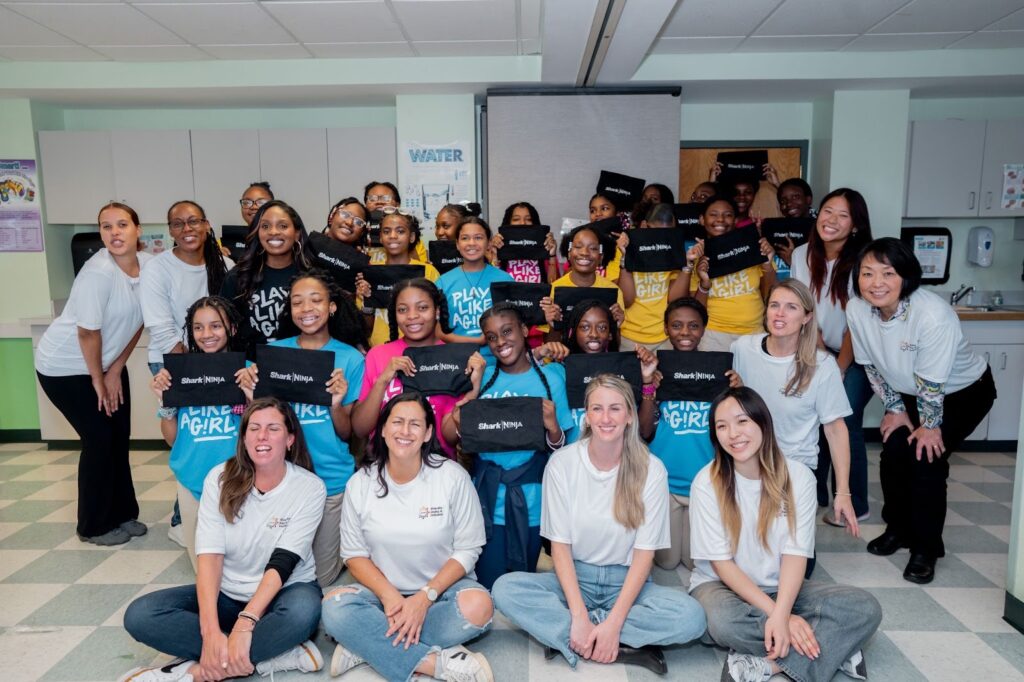
At Play Like a Girl, we connect middle school girls with hands-on STEM learning, mentoring, and career exposure that builds confidence and future readiness. If you want to support girls in your community through volunteering, partnering, or giving, visit iplaylikeagirl.org and explore more stories at iplaylikeagirl.org/stories.
Never miss an update!
Stay in the loop by subscribing to our email list.